
If you manage a fleet of forklifts or industrial equipment, you probably already have answers to questions like these, just not from data. From memory and best guesses: ‘that unit seems to get hit a lot,’ ‘that operator skips the checklist sometimes, but I couldn’t tell you how often,’ ‘I’m not really sure how many hours that forklift actually runs a day, I just know it’s on for most of the shift.’
Those are reasonable answers when there’s no other way to know. The problem is that maintenance, retraining, replacement, and budget decisions all rest on that same imprecise memory. Real-time fleet data changes that — not more screens to watch, but a way to turn guesses into numbers.
Here’s what becomes visible once a fleet starts measuring itself, real examples of what this data actually shows.
1. The difference between ‘it’s on’ and ‘someone’s operating it’
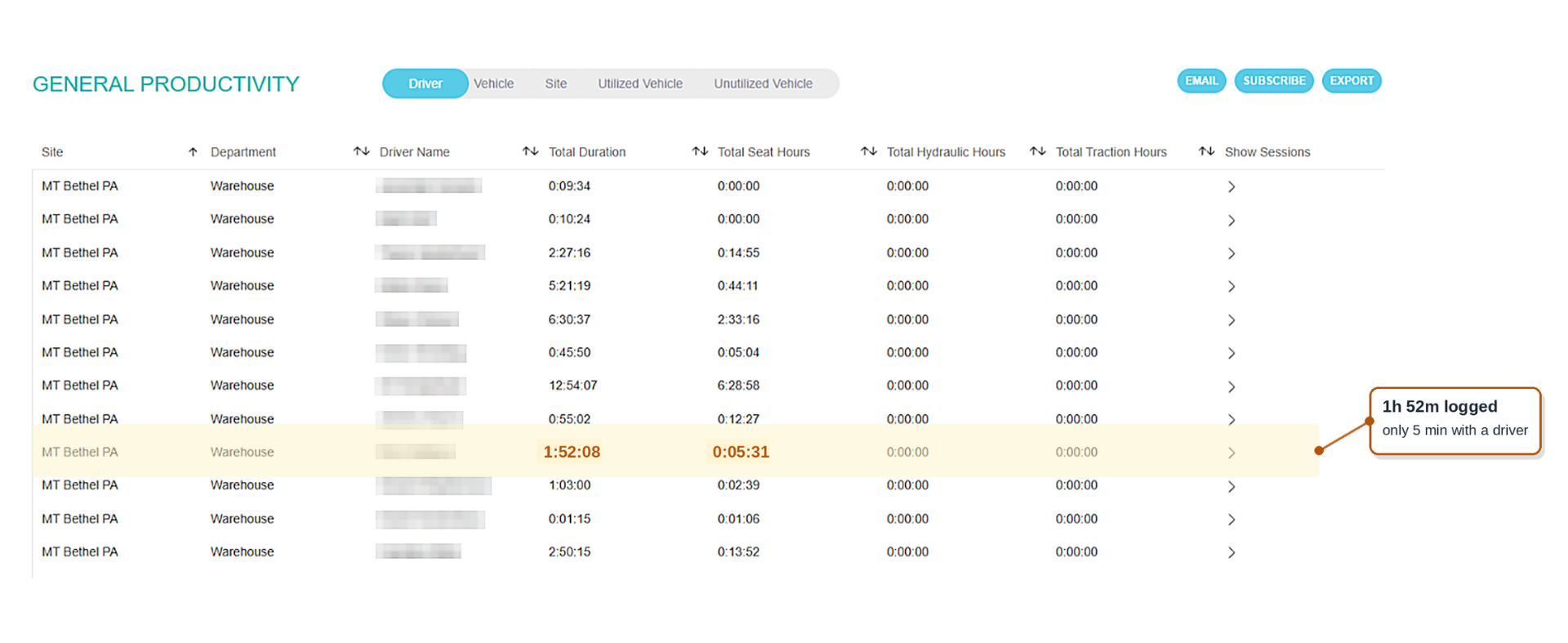
General Productivity
Right now, without connected data, the only way to know if a piece of equipment is actually ‘working’ is to see it yourself or trust that the operator logged the shift correctly. A forklift can show up as ‘in use’ simply because it’s powered on, even if no one is operating it at that moment.
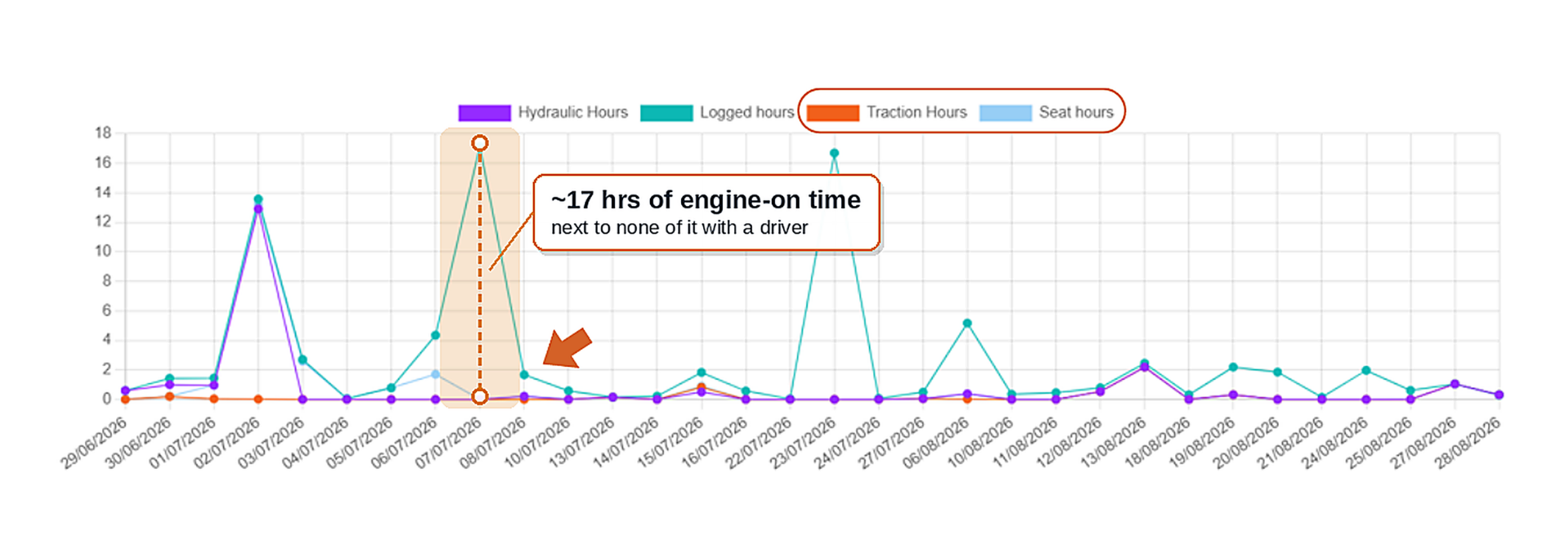
Engine hours vs hours with a driver
Collective Intelligence Group’s fleet systems separate the hours an engine was running from the hours an operator was actually seated and working.
Cross those two numbers and cases show up where a unit racks up hundreds of hours ‘operating’ with only a fraction of that time having anyone actually at the controls.
2. Knowing there was an impact is useful. Knowing how hard changes everything.
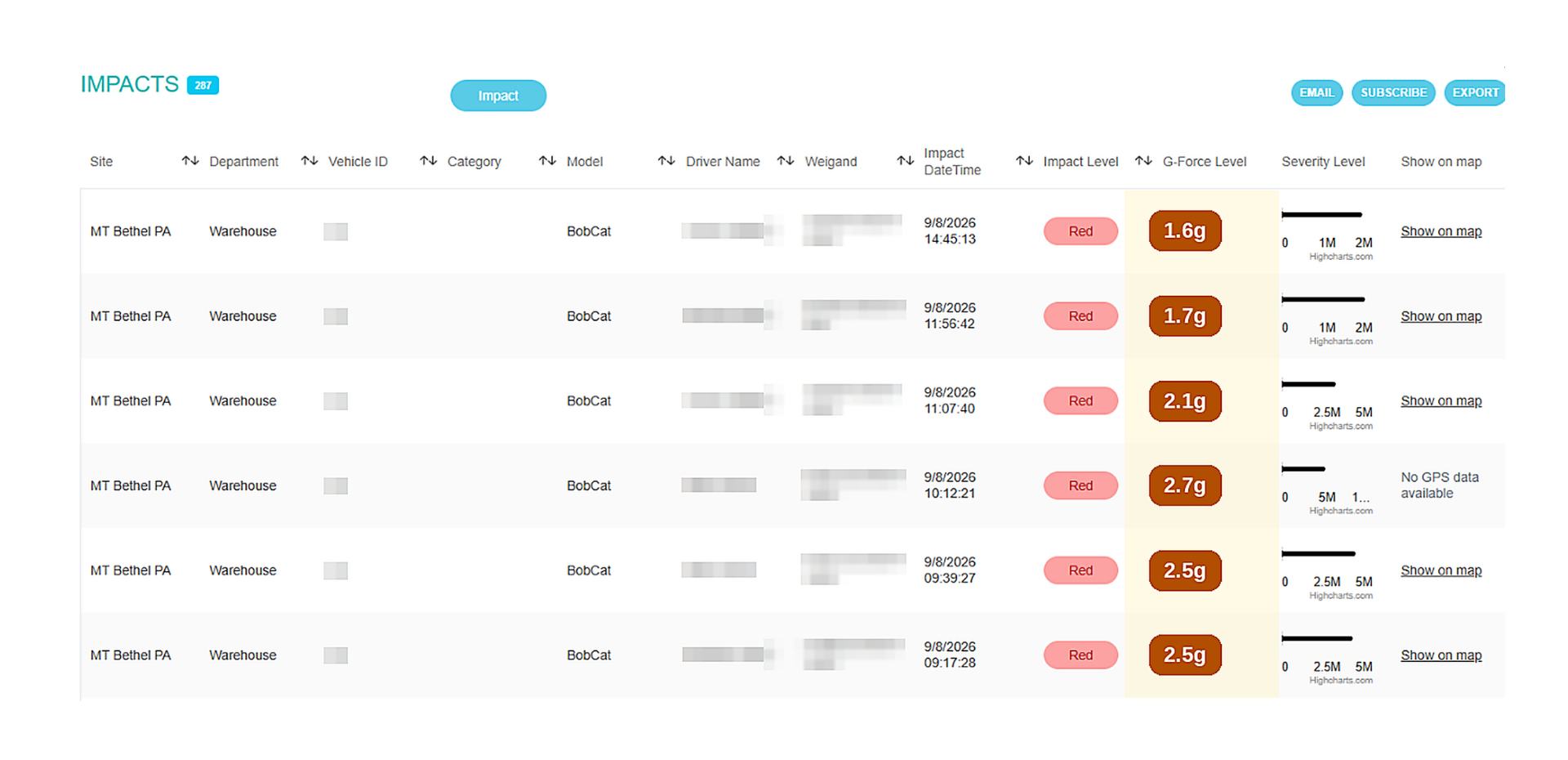
Impacts table
Without that visibility, you usually find out equipment took a hit when someone reports it, when a new scratch shows up, or when the damage is already obvious, and forklift-related injuries remain common enough that this blind spot matters. There’s no way to know in the moment how serious an impact was, or to tell a light bump apart from a real collision.
Every impact gets classified by severity — moderate and severe (Amber and Red) — calibrated to the weight and type of each unit, the instant it happens.
That gives you something you don’t have today: the ability to react differently depending on how serious the hit was, instead of finding out late and treating everything the same way.
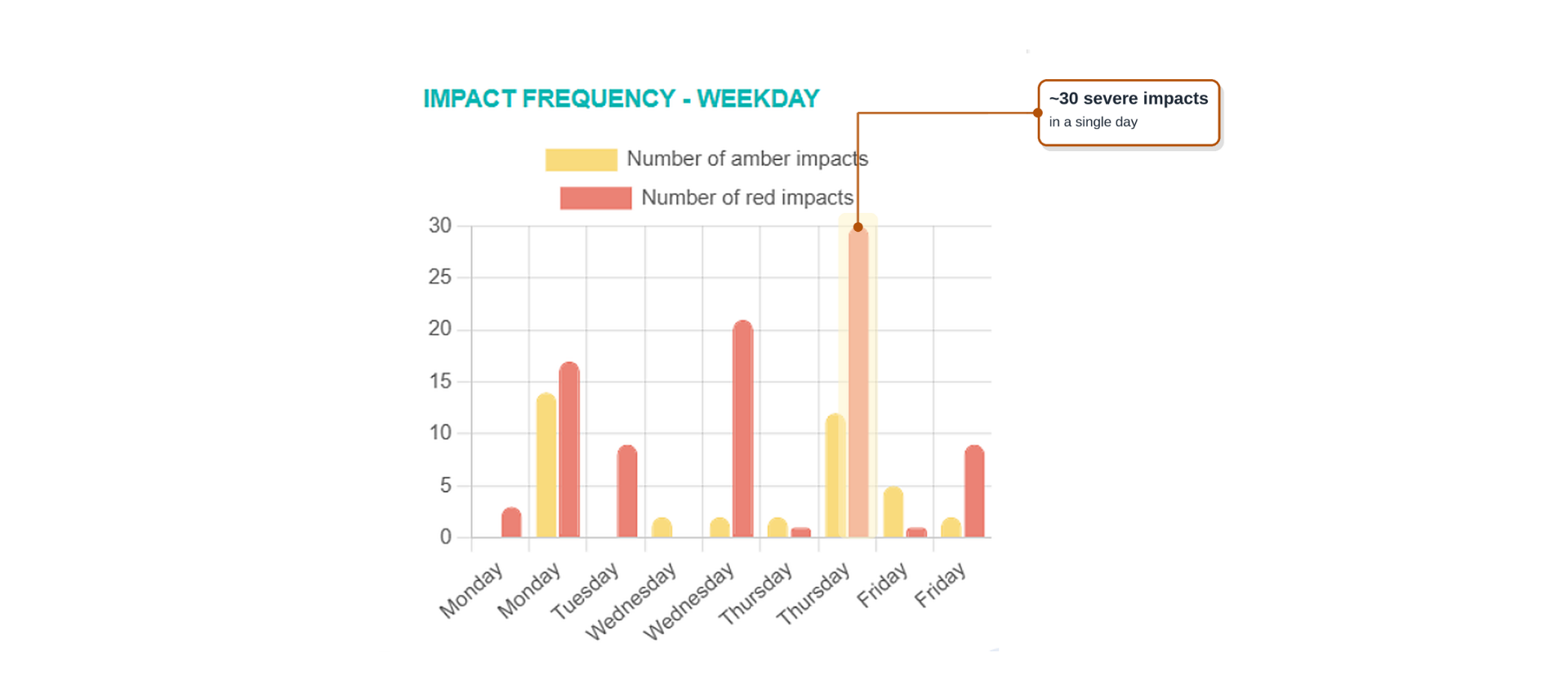
Impact Frequency – Weekday
3. Most safety problems aren’t accidents, they’re a process nobody is checking
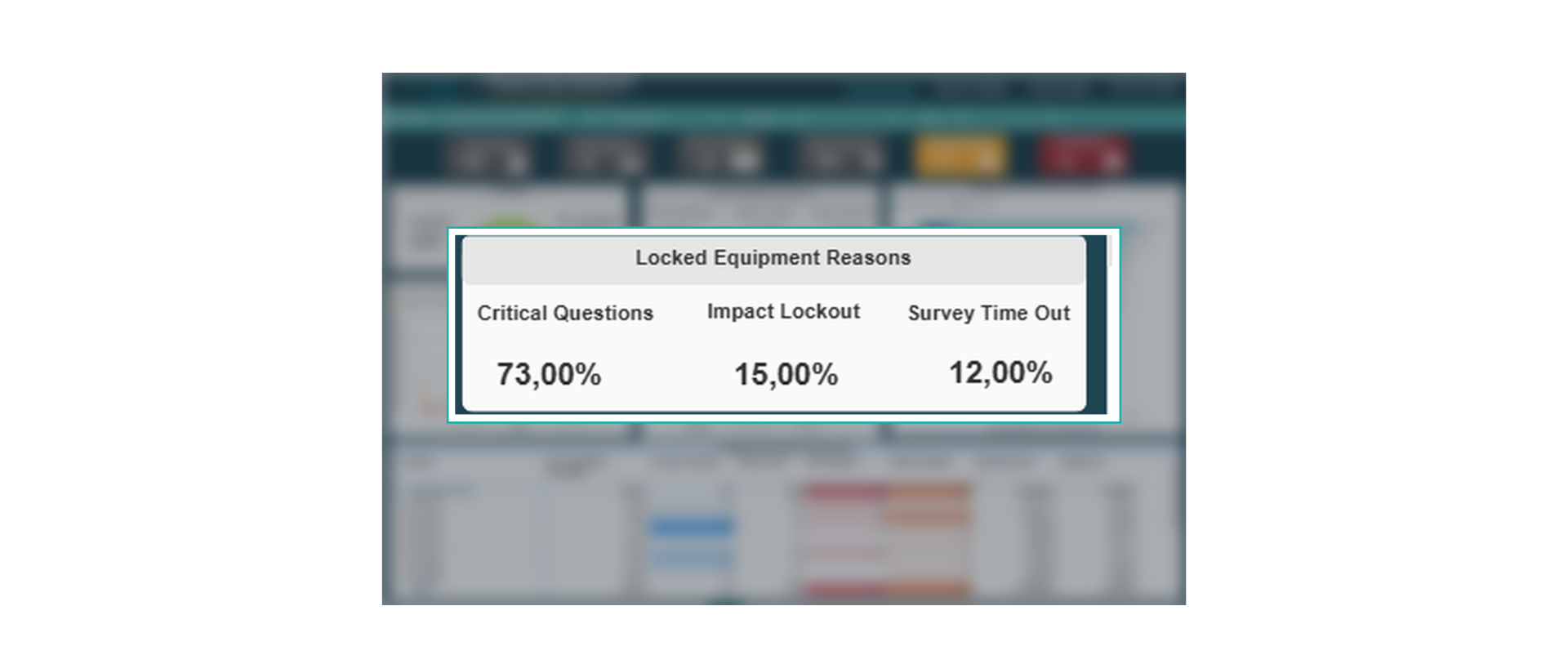
Locked Equipment Reasons
At a lot of operations, the pre-shift checklist is a piece of paper an operator signs, the same kind of check OSHA requires before every shift. No one can really confirm whether it was done properly, done halfway, or signed without checking anything at all.
With connected fleet systems, the equipment itself can stay locked until certain critical checks are completed, and it can log exactly why it locked: an unresolved critical question, a prior impact, or a safety survey that timed out. That tells you something a signed piece of paper never will: whether the process is actually being followed, and exactly where it’s breaking down.
And almost every time this gets measured, most lockouts turn out to come from the checklist, not from impacts or collisions. In other words, the real problem is almost never ‘people drive badly.’ It’s that the startup process is being skipped or done poorly — and now there’s a way to know before it turns into something worse.
It’s not about watching more, it’s about no longer guessing
Everything above comes down to one simple idea: right now, without this kind of data, a lot of fleet decisions get made with the best information available, memory, intuition, and word of mouth. With data, those same decisions get made with certainty.
The data doesn’t replace the judgment of the person who knows their operation, it gives them something concrete to decide on, instead of a general feeling that ‘something’s off’ without knowing exactly what or where.
This is exactly what XQ360 is built to deliver: real operating hours instead of engine-on estimates, automatic impact severity scoring, and lockouts tied directly to checklist compliance, all from one system for your team to act on. It turns the fleet data you already have into decisions you can make the same day.
Frequently asked questions
What is fleet telemetry data and what does it actually show?
Fleet telemetry data is real-time information collected from connected equipment, engine hours, operator sessions, impact events, checklist completion, and lockout triggers. Unlike manual logs or paper checklists, it records what actually happened rather than what was reported. For Fleet Managers, it replaces guesses about utilization, safety, and compliance with verifiable numbers.
How is ‘operating time’ different from ‘engine-on time’ in XQ360?
Engine-on time counts every minute the forklift is powered, including idle periods when no one is at the controls. Operating time counts only the sessions where an authenticated operator was actively using the vehicle. The gap between the two reveals idle time, unauthorized use, and assets that appear busy but aren’t delivering value.
How does XQ360 classify forklift impacts?
XQ360 classifies every detected impact as moderate (Amber) or severe (Red), calibrated to the specific weight and type of each unit. The classification happens automatically at the moment of impact and triggers alerts to supervisors in real time. This means the response can be proportional to the severity, a Red impact triggers an immediate review, while an Amber may be logged for pattern monitoring.
What causes a pre-shift checklist lockout in XQ360?
A lockout can be triggered by several conditions: a critical checklist question answered negatively (flagging an unsafe condition), a prior impact that hasn’t been reviewed and cleared, or a checklist that timed out before completion. Each lockout is logged with a specific reason, which means supervisors can see not just that a vehicle was locked, but exactly why, and whether the underlying issue was resolved before the vehicle returned to service.
Does XQ360 work across different forklift brands?
Yes. XQ360 is brand-agnostic and connects to any forklift regardless of manufacturer. For mixed-brand fleets, this means all the telemetry data, operating hours, impacts, lockouts, checklist compliance, lives in a single system regardless of how many brands are in the fleet. That makes cross-fleet comparison and reporting possible without manual reconciliation across multiple dashboards.
How does fleet data improve operational decisions?
Fleet data replaces the guesswork that currently underlies most maintenance, retraining, and replacement decisions. When you can see which units accumulate the most idle time, which operators have repeated impact events, and which sites have the highest checklist failure rates, decisions about where to focus attention become straightforward rather than intuitive. The data doesn’t replace operational judgment, it gives it something concrete to work from.